Showing posts with label sedan. Show all posts

Wednesday, 19 October 2011

Lexus IS


Lexus IS


If you're shopping for an entry-level luxury sedan with a sporty disposition, you'll undoubtedly come across the compact Lexus IS 250. Although modestly powered for a premium-brand sport sedan, the Lexus IS 250 offers all the other virtues of the current IS series, including precise handling, a top-quality interior and an extensive array of high-tech features.
Lexus IS

In addition, the Lexus IS 250 has typically offered a wider variety of drivetrain configurations than the more potent IS 350. On the standard rear-wheel-drive sedan, the company gives you a choice of a six-speed manual or a six-speed automatic transmission. If you've settled on the automatic, you have the option to order your Lexus IS 250 with all-wheel drive.

Lexus IS

Choices are many in the highly competitive entry-luxury sedan market. The Lexus IS 250 is a respectable pick, but its lack of serious speed will deter hard-core enthusiasts, as will its muted steering feedback. And in terms of comfort, a cramped backseat means it won't be the best choice for families or those who frequently take on passengers.
Current Lexus IS 250


Lexus sells the IS 250 in a single trim level, with either rear-wheel drive or all-wheel drive. For power, the 250 comes with a 2.5-liter V6 rated for 204 horsepower and 185 pound-feet of torque. Rear-drive models can be had with a six-speed manual transmission or a six-speed automatic, while the AWD car is only available with the automatic.

The standard equipment list includes 17-inch alloy wheels, keyless ignition/entry, power front seats, leather upholstery and a 13-speaker sound system. Major options include xenon headlights, heated/ventilated front seats, a Mark Levinson surround-sound audio system, a navigation system and an F Sport package that includes a sport-tuned suspension and sport seats.


On the move, the Lexus IS 250 is smooth-riding and quiet but a bit light on emotion. Handling is secure and precise, particularly with the sport package fitted, but the IS never communicates with its driver the way a BMW 3 Series sedan does. Otherwise, the Lexus IS 250's dynamics are certainly on par with the other leading entry-luxury sedans. Acceleration is adequate for a car in this price range, but with 0-60-mph estimates falling around the 8-second mark, we'd hardly call it pulse-quickening.

Inside, the leather-lined Lexus IS 250 feels luxurious even in standard spec -- something that can't be said of many entry-level luxury sedans in this price range. Seat comfort and passenger room are excellent up front, but the backseat offers considerably less legroom than most competing luxury sport sedans do.


Courtesy By:

Tuesday, 18 October 2011

Toyota Camry

Toyota Camry
 
To those of a particular generation, the Toyota Camry is the epitome of the four-door, mid-size sedan. The best-selling mid-size model has long appealed to budget-conscious families for its reliability, low running costs, spaciousness, and (in most versions) good fuel economy, but at the same time the Toyota Camry has never been very flamboyant or exciting to drive. Over time, the Toyota Camry has come to be thought of as a little too 'vanilla' for some tastes—comfortable, nevertheless. 
Nevertheless, after decades, this nameplate remains solidly at the center of the mid-size sedan market. Alternatives to the Toyota Camry have included the Chevrolet Malibu, Ford Fusion, Honda Accord, Hyundai Sonata, and Nissan Altima, among many others.


Toyota Camry

Whether you buy a Toyota Camry from the 1990s or a brand-new one, you're getting a comfortable, spacious sedan that performs reasonably well but isn't downright sporty. In recent years, the Toyota Camry has kept to the same formula, but Toyota has upgraded safety and added desirable options like a navigation system, heated leather seats, and a smart key system.
The Toyota Camry first was introduced to the U.S. market as a front-wheel-drive replacement for the rear-wheel-drive Corona. Quite boxy and basic, that first Toyota Camry won over masses of U.S. buyers who, during that time, were reaching a critical point of frustration over the reliability and quality of domestic-brand cars.

 Toyota Camry

Subsequent Toyota Camry models became a little larger, more refined, and more comfortable and luxurious with each generation. At the time the second-generation Camry made its debut for 1987, the Camry's 115-horsepower, 2.0-liter four-cylinder was quite technically advanced as it was one of the first engines in an affordable four-door sedan with four valves per cylinder. Wagon variants of the Toyota Camry were reasonably popular through this period, too, and a five-door hatchback version of the model was even sold through '86.


Toward the late '80s, Toyota added a V-6 option for the first time, and it began offering all-wheel drive (All-Trac) on some versions. That was the start of the Camry's movement slightly upscale, and for 1991, Toyota broke the U.S. Toyota Camry line away from the version made for its home market, recognizing that U.S. families wanted a larger product and aiming the model solidly at the same shoppers who at that time were considering the Ford Taurus. Toyota had, in 1988, begun assembling Camrys for the U.S. in Georgetown, Kentucky, where it's still produced today.
Two different U.S. Camry generations spanned the 1990s. Of those, the first (distinguished by rounded sheet metal and soft features) offered a tremendous leap in luxury over the previous model. The latter fourth-generation Toyota Camry was panned at launch for its especially bland styling (and the wagon was discontinued), but it was an even stronger seller. Through these two generations the Toyota Camry didn't make any tremendous advances, but its four-cylinder and V-6 engines grew in size and produced more power.


This past decade has seen two generations of the Toyota Camry. The previous generation, introduced for 2002, introduced a rounder look once again—this time making major advances inside with significantly upgraded materials—with a stronger 162-horsepower, 2.4-liter base engine. A 192-horsepower, 3.0-liter V-6 remained a popular option, and safety features were bolstered during this generation with the phasing-in of side airbags and stability control on some models.Then, for 2007, the Toyota Camry was redesigned again, with a smoother, less slab-sided look, much-improved safety and safety features, and an all-new 268-horsepower, 3.5-liter V-6 and six-speed automatic transmission at the top of the range. In this latest generation, a tighter suspension and upgraded wheels in the SE V-6 model brings a more sophisticated VDIM stability control system and a surprising level of responsiveness and performance satisfaction, if you can get past the bland appearance.


Also making its debut for 2007 was the Toyota Camry Hybrid, which paired a version of Toyota's Hybrid Synergy Drive (originally developed with the Prius) with an especially frugal version of the sedan's 2.4-liter four-cylinder engine. Altogether the system made 192 hp—the same as the V-6 a year or two before—but with gas-stingy EPA fuel economy figures of 33 mpg city, 34 highway.
For 2010, the base Toyota Camry got an even larger four-cylinder engine—a 2.5-liter, making 169 or 179 hp, while fuel economy was actually made better thanks to a new six-speed automatic transmission. A six-speed manual remained available on a limited basis with the four.
In 2012, the Toyota Camry was given a complete redesign, but from the outside the changes were so evolutionary that some might only see it as a mild refresh. Nevertheless, the 2012 Toyota Camry gets some substantial improvements to comfort, refinement, and handling. Gas mileage was also improved across the lineup (up to 25/35 for the four-cylinder), and a completely reworked Camry Hybrid—with an EPA city rating of up to 43 mpg—was the star of the lineup. Safety features were also substantially upgraded, with ten standard airbags, newly standard side rear thorax bags, and an improved structure, while Bluetooth hands-free connectivity was made standard on all models.   


Courtesy By:

Sunday, 9 October 2011

FORD FIESTA


FORD FIESTA


The 2012 Ford Fiesta ranks 1 out of 34 Affordable Small Cars. This ranking is based on our analysis of 27 published reviews and test drives of the Ford Fiesta, and our analysis of reliability and safety data.
FORD FIESTA

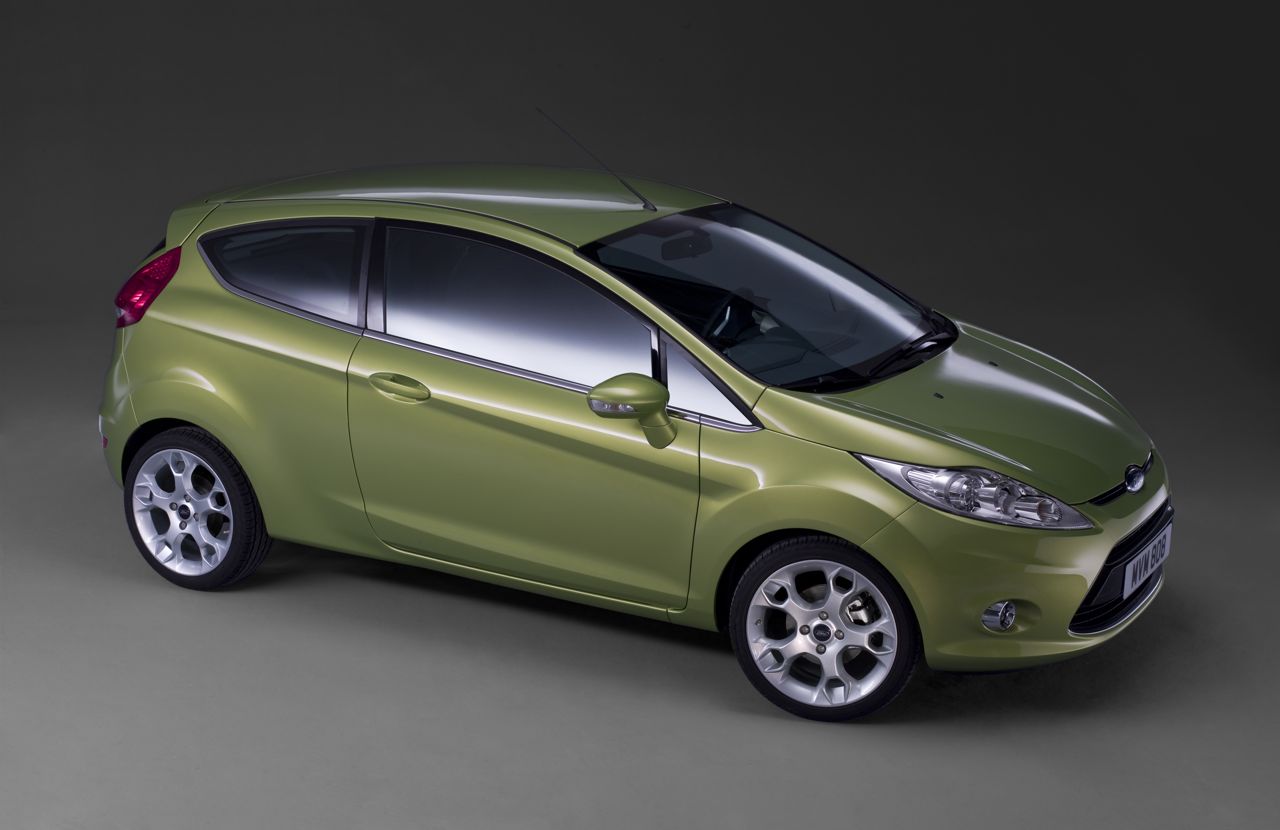
The 2012 Ford Fiesta is a well-rounded small car that offers good driving dynamics, a comfortable interior and competitive interior tech for the class, but shoppers who need a lot of cargo space should check the competition first.
The Ford Fiesta hit the market in 2010, and for 2012, reviewers are still impressed with the 2012 Fiesta’s nearly perfect package. They say thisaffordable small car offers cute looks, fun color options, a quality interior, fun driving dynamics, upscale tech and good fuel economy ratings for the class.
FORD FIESTA
That said, there are a few caveats consumers should know. In advertisements, Ford says the Ford Fiesta gets 29/40 mpg city/highway. That’s with the Fiesta’s Super Fuel Economy package that’s optional on SE trims and higher, which means you pay more for good mileage. Second, while the Ford Fiesta offers SYNC, Ford’s infotainment system, it’s constantly criticized for being difficult to use. Finally, even though the Ford Fiesta is available as a hatchback, it is not the most utilitarian five-door in the class. That honor is reserved for the Honda Fit, which has a standard Magic Seat and up to 57.3 cubic feet of cargo space.

Reviewers say it’s hard to dislike the Ford Fiesta, but with the 2012 Hyundai Accent and 2012 Kia Rio’s transformation into worthwhile competitors with quality interiors and great fuel economy, they also say we’ll have to wait and see if the Ford Fiesta can stay at the top of its class.


The Ford Fiesta sedan and five-door hatchback come in four trims: the base S, SE, SEL and SES. The base S is available only as a sedan, and the sedan is not available in the SES trim. The hatch isn't available in the SEL, though the two trims are nearly identical in terms of features and options.

The Ford Fiesta is in its second year of production, and there are few changes to the model. In response to critiques from the automotive press, Ford has added a center arm rest and blind spot sideview mirrors. The automaker has also added new interior style packages.


Courtesy By:

Share

Twitter Delicious Facebook Digg Stumbleupon Favorites