Showing posts with label honda cars. Show all posts

Wednesday, 14 December 2011

Honda Fit


Honda Fit

Honda Fit


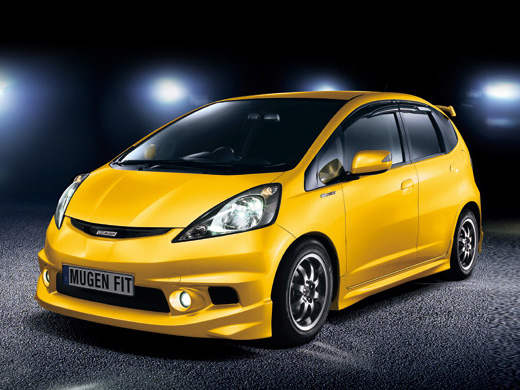
Introduced a few years ago just as gas prices were beginning to race skyward, the Honda Fit now looks like a happy little piece of automotive prophecy. A subcompact four-door hatchback, the Honda Fit has earned praise for its world-class engineering and design, and it has definitely found its niche with consumers, particularly with the arrival of the second-generation model. With either generation, you'll find crisp handling, an adaptable interior, high-quality fit and finish and a relatively low price. For small-car shoppers, the Honda Fit represents an almost ideal package.
Honda Fit


Current Honda Fit
The Honda Fit is available in two main trim levels: base and Sport. Both come with a fuel-efficient 1.5-liter four-cylinder engine that produces 117 horsepower and 106 pound-feet of torque. A five-speed manual transmission is standard, with a five-speed automatic transmission being optional. Paddle shifters are included with the automatic for the Sport version. Fuel economy is respectably good with either transmission.
Honda Fit

On the base Fit, air-conditioning, cruise control, keyless entry a tilt-and-telescoping steering column and a four-speaker audio system with a CD player, auxiliary audio jack and iPod/USB audio interface are standard. The Honda Fit Sport gains bigger wheels, sportier exterior trim details and a six-speaker audio system with an iPod-friendly USB port. Fit Sports can also be optioned with a touchscreen navigation system.

The Honda Fit is Honda's smallest automotive product, but it nearly matches the total passenger space of the larger Civic sedan. To help achieve this, Honda has installed a compact rear suspension design and placed the fuel tank underneath the passenger seat. Another key advantage for the Honda Fit is its innovative, highly versatile rear seating arrangement. The "Magic Seat" has seatbacks that fold flat and seat cushions that can be flipped upward, creating a tall load area right behind the front seats -- sort of like a crew cab pickup's rear seats. Maximum cargo capacity is an impressive 57 cubic feet.

In reviews, we've found the Honda Fit to be a pleasure to drive for a frugal subcompact. The car has a solid feel to it, countering the perception of vehicles in this class as tinny econoboxes. Generally speaking, the Honda Fit continues the model's tradition of providing serious bang for the buck, and its combination of driving dynamics, polish and big-time practicality distinguish it from the competition.

Used Honda Fit Models
The current second-generation Honda Fit debuted for the 2009 model year and has seen no significant changes since.

The first-generation Honda Fit was available for just two years: 2007 and 2008. It came in two trim levels with no factory options available. The base version adhered to a minimalist philosophy, though it still came standard with air-conditioning and a CD player. The uplevel Sport trim was snazzier and, predictably, we favored it. It featured larger, 15-inch alloy wheels, stickier tires, exterior styling pieces, keyless entry, cruise control, a leather-wrapped steering wheel and a premium MP3-compatible audio system with an auxiliary audio jack.

The Fit stuck to the Honda playbook when it came to interior controls, which were intelligently designed and utilized high-quality materials. For a subcompact, the first-generation Honda Fit was surprisingly roomy and versatile. Chalk much of that up to the car's specialized second-row, 60/40-split seat design. The rear seats could be placed into four different configurations, depending on passenger or cargo needs. Folding the rear seat flat provided a surprising 41.9 cubic feet of cargo capacity.
Both trim levels were front-wheel drive and were equipped with a 1.5-liter, 109-hp four-cylinder engine. A five-speed manual transmission was standard, and a five-speed automatic was optional. Fit Sports with the automatic also had steering-wheel-mounted shift paddles.

We found the first-generation Honda Fit to possess an enviable driving-fun-to-thrift ratio. Cornering and acceleration were crisp. The subcompact could achieve 0-60-mph sprints in fewer than 10 seconds with either transmission. Fuel economy was commendable, and safety was good. The whole thing was almost perfect. Almost. The main downside was that although the car seemed less tinny than other cars in its class, at highway speeds the engine made its presence known. The lack of a telescoping steering wheel could also be an annoyance for taller drivers. But on balance the first-generation Honda Fit provided about as much fun, satisfaction and value as you could find in a small economy car.




Thursday, 20 October 2011

HONDA CRZ


HONDA CRZ

Finally the 2011 Honda CR-Z has come down off the stand at the auto shows and it's sitting right here on the asphalt on Naruto Skyline, a mountain road down the spine of Shikoku, the smallest of the main islands of Japan. We've been waiting to get behind the wheel of the Honda CR-Z since the concept first appeared at the 2007 Tokyo Motor Show, and now we're getting our chance.


                                                 HONDA CRZ


Already there's plenty of hype building for the car's introduction to the U.S. late this summer, as American Honda has already built a Web site to promote the car's arrival. But this is the real car in front of us, ready to be released into the Japanese market, and Honda officials tell us that the American version won't be much different.

                                                   HONDA CRZ


The 2011 Honda CR-Z asks a lot of questions. The recession has dramatically affected Honda's adventurous engineering spirit, and the company has had to sell its Formula 1 team, cancel the development of its new front-engine replacement for the Acura NSX and end the sale of the Honda S2000 in America. Does this company still have the imaginative engineering that makes it so different?
The Honda CR-Z is certainly a different kind of car. A hybrid can be a lot of things. Clean, clever and fuel-efficient, without a doubt, and a poster child for a forthcoming generation of sensible cars. But fun?


Honda has been working hard to make sure that the 2011 Honda CR-Z makes us remember the Honda CR-X, its two-passenger coupe built from 1983-'91. Just as with the CR-X, the mission here has been to build a small, smart, eco-friendly coupe for the modern era. Lightness and efficiency are the key attributes, because the combination of 122 horsepower and a curb weight north of 2,550 pounds tells you the Honda CR-Z is not going to be blowing too many doors off a Bugatti Veyron any time soon.


Here on the Naruto Skyline, the CR-Z defies its critics in cyberspace, who have been quick to dismiss the idea of the first hybrid with a six-speed manual transmission. It proves surprisingly taut, sporty, agile and entertaining as it tackles the twists and turns of the Shikoku roads.Of course, it's a totally different car from the CR-X coupe. That is to say, it's not some kind of cut-down Honda Civic coupe with a manic 1.6-liter VTEC twin-cam engine screaming its way to an 8,000-rpm redline. Nor is it a redo of the original Honda Insight, the slippery 1.0-liter hybrid coupe that Honda launched back in 1999 as the first hybrid to go on sale in the U.S.


Fact is, the 2011 Honda CR-Z falls somewhere between the two — both in terms of design and in the amount of performance on offer. Honda believes that this is the right combination to build a network of  CR-Z enthusiasts from Mini-type buyers who like the idea of a smart premium-style compact, only with the green image that a hybrid conveys.
The Honda CR-Z is like a Tesla Roadster, but without the $109,000 price tag.


While the Honda CR-Z is loosely based on the current four-door Honda Insight sedan, you'll be cheered to know that the Honda engineers have massively improved the formula by shortening the wheelbase, widening the front and rear track and making the structure far more rigid.


The car measures 160.6 inches from end to end, 68.5 inches wide and only 54.9 inches to the tip of its antenna. The wheelbase is 95.8 inches, some 4.6 inches shorter than the Insight, and the Honda CR-Z retains the suspension of the Insight platform with front MacPherson struts and a rear torsion-beam setup. The bad news is, Honda claims only a 97-pound reduction in weight from the Insight sedan.


Once you pull open the somewhat heavy door, a novel interior design awaits, a kind of cost-conscious, Honda-type attempt to deliver the arty style of a Mini or Fiat 500. The low-set driving position is just what you want in a performance car, and the pedals and shift lever feel perfectly placed. The sport seat offers fine all-around support and looks good. The instrument panel is a busy mass of buttons, lights and switches, but there are cool touches like the usual entertaining display of power flow through the internal combustion engine and hybrid system.
Don't look back, though, because rear vision is badly hampered by that dramatic, sloping roof line, especially into the blind spots over your shoulders. In Japan, the Honda CR-Z comes as a 2+2 with kid-size jump seats behind you, but the new small Honda will be strictly a two-passenger vehicle in the U.S.


Courtesy By: 

Thursday, 6 October 2011

Honda Brio

 HONDA BRIO
According to the model of the new small concept cars unveiled in January this year at Auto Expo 2010 in New Delhi, India, Honda has unveiled a pre-production version of its new small city car called Honda Brio Concept to 27th Thailand International Motor Expo.

HONDA BRIO


Developed for the Asian markets in Thailand and India in 2011, Honda Brio Concept has a small footprint measuring only 3610 mm in length, 1,680 mm in width and 1475 mm in height. While 2011 Honda Brio Concept maintains the basic styling theme concept car has a pre-production prototype has been weakened by a new grille looked like a last minute addition, and not very attractive about it.

HONDA BRIO
 
 
Honda Brio Mass production model to entry-level car for emerging markets, Honda will develop unique versions for Thailand and India, the different needs of customers in these markets.
Honda said the Thai model introduced in 2011 is scheduled for March with a starting price of 400,000 baht or about U.S. $ 13,300. Honda Brio will be powered by an engine more efficient return of the combined consumption of less than 5 lt/100km [47.0 U.S. mpg].


For the Indian model, which is scheduled to be introduced in 2011, said the Japanese automaker engine choices will need to think “the right balance between performance and price of Honda Brio.”
Honda wants the joy of movement and more customers in Thailand, India and other Asian countries, spread by the introduction of a new Honda Brio, small car with a compact and highly efficient packaging with its own experience cultivated motorcycle company here in Asia, “said Takanobu Ito, Chairman and CEO of Honda Motor Company.


courtesy by:
http://autocarsnews.info/concept-cars/honda-brio-concept/

Share

Twitter Delicious Facebook Digg Stumbleupon Favorites